

Resources
Caring for Santa Fe County Wetlands and Rivers

This document is an updated version of the 2023 Wetlands Action Plan (WAP) for Santa Fe County. It can be used by anyone to help plan and fund wetland projects in the county. The document was developed with the help of Santa Fe County, New Mexico Environmental Department, and many other organizations, agencies, pueblos and individuals.
Galisteo Watershed Conservation Initiative

This two part initiative developed a Green Infrastructure Plan for the Galisteo Watershed and implemented the Conservation and Restoration Pilot Project based on the Green Infrastructure Plan’s conclusions and recommendations to evaluate planning outcomes and verify that the plan was ready for practical implementation. This document was developed in collaboration with the Santa Fe Conservation Trust.
Caring for Good Trails: A Field Guide

This guide describes essential maintenance considerations for unimproved, single-track, backcountry trails for middle-elevation rangeland areas in the southwestern U.S. This guide was developed in collaboration with the Santa Fe Conservation Trust and designed for volunteer trail stewards.
Plan for Restoring the Rio Embudo Watershed

A public summary of the 2019 Update of the Watershed Based Plan (WBP or Watershed Plan) for the Lower Embudo watershed in northern New Mexico. This Watershed Plan aims to outline steps toward improving the water quality of the Rio Embudo between 2020 and 2040. See a link to the full document below.
An Introduction to Erosion Control

This is an illustrated field guide for the general promotion of erosion control techniques. It is designed to be used by a broad audience that includes project managers, government officials, participants of educational workshops and field tours, along with contractors and volunteers. This project was sponsored by the New Mexico Environment Department with financial support under Clean Water Act Section 319(h).
Water Storage Opportunities in Headwater Catchment Areas

This study addresses methods to improve water storage in headwater catchment areas through logging and small-diameter timber extraction. The paper identifies the most appropriate locations for forestry interventions and details the best practices for treatments in these areas. This research was funded by the Cimarron Watershed Alliance and focuses specifically on the Cimarron watershed in northern New Mexico.
Lower Rio Embudo Watershed-Based Plan

Updated Watershed-Based Plan for the Lower Rio Embudo prepared with support from the New Mexico Environment Department. The following appendices are also available (click for link):
APPENDIX 01 Social Survey 2014
APPENDIX 03 Custom Soil Survey Reports APPENDIX 05 DRAFT Empirical Data Analysis
Wind Impacts: A Growing Climate Concern

This blog article describes the often underestimated impacts of wind erosion and the need for active wind management, especially as the southwest becomes drier and more erosion prone. Quickly learn about several management techniques that have been deployed to mitigate wind erosion impacts including keyline plowing, silvopastoralism, and agroforestry in this article hosted by the NM Healthy Soils Working Group website.
Wind Impacts in Forests: Literature Review

This white paper reviews literature describing the various impacts of wind in forest ecosystems, including erosion, blow down, and evapotranspiration. Wind related impacts to forest and other ecosystems in the southwest are expected to be intensified in future climate scenarios. Given this knowledge, Ecotone is interested in furthering this research through the development of projects that evaluate wind impacts and ultimately help to develop specific management measures for their mitigation.
Applying Keyline Design Principles to Slope Wetland Restoration
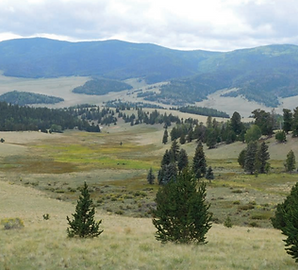
This technical guide describes the role that Keyline Design can play in slope wetland restoration. The guide aims to inform wetland restoration program managers, restoration professionals, contractors, volunteers, and students how Keyline Design integrates and follows years of technical development, testing, and documentation of a broad toolbox of approaches to wetland restoration. The guide was developed in collaboration with Quivira Coalition with financial support from the New Mexico Environment Department.
Piñon-Juniper (PJ) Spot-Thinning Field Guide

This field guide presents recommendations to the selective ("spot") thinning of Piñon and Juniper trees for purposes of ecological restoration of Piñon-Juniper (PJ) savannah and open woodland sites. The guide provides a step-by-step decision process to determine what trees to select for cutting and which ones to leave to optimize ecological health and reduce fire risk.
A Field Guide on the use of Piñon-Juniper (PJ) Materials in Erosion Control Structures

This field guide to the use of erosion control structures made with Piñon-Juniper (PJ) materials gives a detailed explanation of eight different methods for preventing erosion in a way that is both effective and beneficial to the landscape. Using slash from PJ woodland thinning has many benefits, all of which are listed in the introduction of the field guide. Within the text, you will find detailed descriptions and imagery of each of these erosion control structures as well as how to design and construct each one. Find a version in Spanish here.

Wildland Urban Fire Summit Presentation:
Achieving Landscape Scale Piñon-Juniper Ecosystem Treatment Efficiency
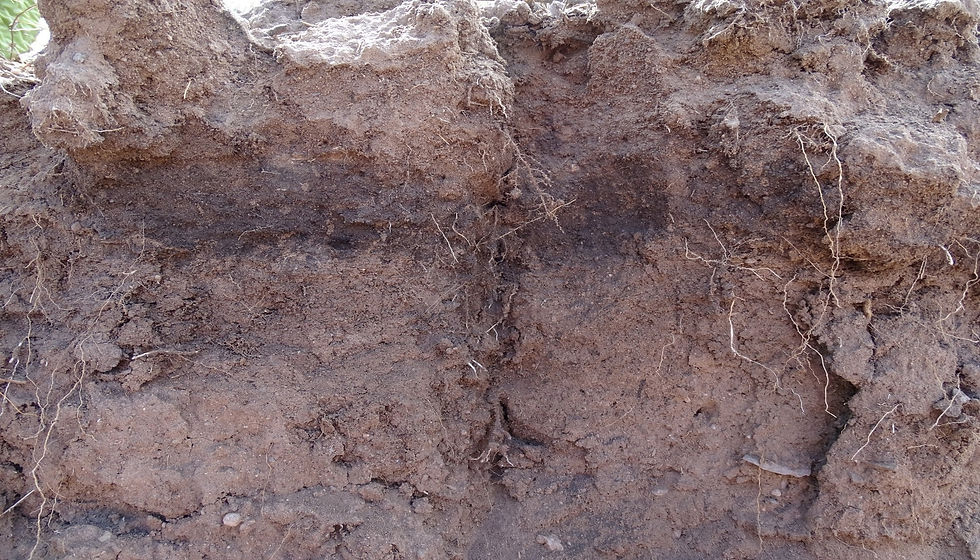
This four part series addresses what soil really is, what soil health looks like, and how this relates to erosion, sediment accumulation, water conservation in the soil, and getting plants to grow. You will be introduced to the Five Soil Health Principles and learn how to conduct simple terrain measurements and soil observations to evaluate soil health conditions. The series was presented by Jan-Willem Jansens of Ecotone Landscape Planning, with support from Embudo Valley Library & Community Center, New Mexico Department of Agriculture’s Soil Health Program, and Quivira Coalition.
Watch the four part series here:
Webinar 1: https://youtu.be/1Pnmt-IhyAg
Webinar 2: https://youtu.be/1H1FsCZ-JxA
Webinar 3: https://www.YouTube.com/watch?v=BC6A032fH50
Webinar 4: https://www.YouTube.com/watch?v=eka_tKuws6Q
Healthy Soils Webinar Series

This three part series addresses the ecology of PJ ecosystems, both below and above ground, and what interactions take place between the surface and soil ecology. The webinars will identify local soil conditions and how to improve them. You will learn more about indicators of PJ ecosystem health below and above-ground, erosion and sedimentation in PJ ecosystems, how plants are connected through fungal networks, how the soil microbiome accumulates carbon, to what extent the soil system stores water, and the role of fire. The series was presented by Jan-Willem Jansens of Ecotone Landscape Planning and The Forest Stewards Guild, with support from the New Mexico Department of Agriculture’s Soil Health Program, and Glorieta Freedom Ranch.
Watch the three part series here:
Webinar 1: https://www.youtube.com/watch?v=yp7MBfHrtEw
Webinar 2: https://www.youtube.com/watch?v=cEnounsyDZ8
Webinar 3: https://www.youtube.com/watch?v=p-zArTRmaxI
Webinar Series
Soil Health in Piñon-Juniper (PJ) Woodlands
